
 Deutsch
Field Notes / Namibia
Namibia Trip in May 2025 — Astrophotography and Pure Wilderness
A travel report from dark desert skies, remote camps, unexpected challenges and some of the most impressive night-sky moments I have ever experienced.
Namibia had been on my astrophotography list for a long time — and in May 2025, the journey finally became real.
What followed was one of the most intense, demanding and rewarding trips I have ever experienced. Remote desert landscapes, extremely dark skies, long nights with camera gear, wild camping, unexpected weather, tourist disappointments and unforgettable moments all became part of the story.
This was not a comfortable photo trip built around perfect conditions every night. It was a real adventure — dusty, exhausting, sometimes frustrating, but also full of moments that reminded me exactly why I love astrophotography.
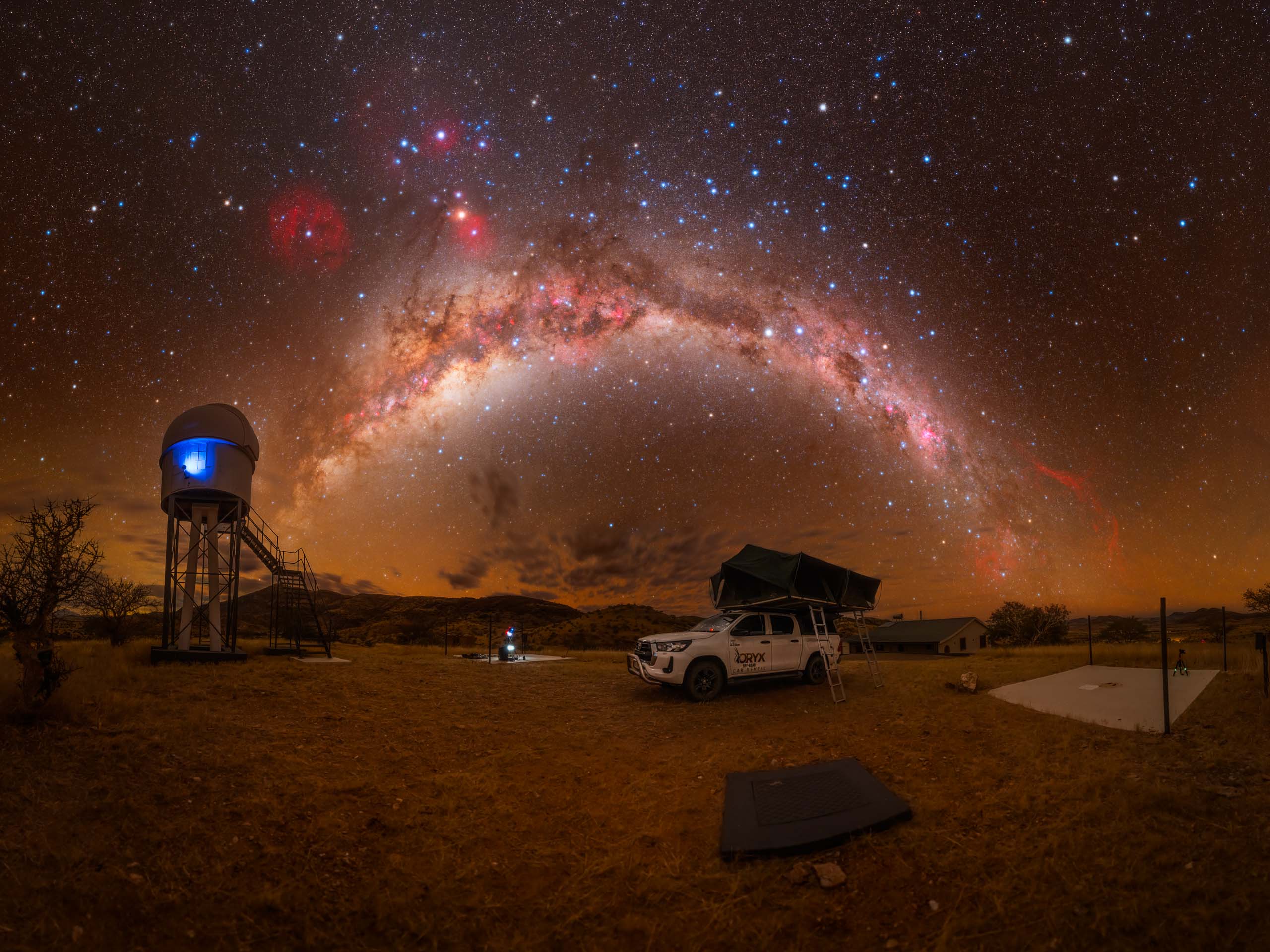
Camping at the Observatory from Rooisand Desert Ranch.
First stop
Rooisand Desert Ranch
Our journey began at Rooisand Desert Ranch, located in the Khomas Highlands near the impressive Gamsberg. The landscape immediately felt like the right start for a Namibia astrophotography trip: wide open views, dry terrain and a strong sense of isolation.
The ranch itself combines lodge comfort with remote camping options, including campsites away from the main building. For astrophotographers, the location is especially interesting because of its open surroundings and the observatory on site.
The first nights were not perfect from a weather perspective, with clouds moving through the sky. But those imperfect conditions also created dramatic scenes, time-lapse opportunities and atmospheric night images that would not have happened under a completely empty sky.
Valley of a Thousand Hills and the Search for Darkness
One of the most memorable parts of the journey was the Valley of a Thousand Hills Camp. During the day, the landscape felt almost surreal, with endless layers of hills and formations stretching into the distance. At night, the area had the kind of silence and darkness that makes astrophotography feel completely different from shooting closer to home.
Not every location worked out perfectly. At one camp, the landscape was beautiful, but strong wind, nearby lights and the general setup made deep-sky work difficult. That became a recurring theme of the trip: some places looked promising at first, but only real conditions at night showed whether they were suitable for astrophotography.
After a short night and a quick breakfast, we left early for a location we had kept in mind as our “secret spot”. It was not marked as a typical astrophotography destination, but it gave us exactly the feeling we were looking for: no roads, no people, no civilization — just nature, silence and the night sky.
We spent three nights there, and each one had its own character. The landscape felt wild and almost unreal, with open plains, strange formations and a complete sense of isolation. For our cameras, it was a dream. For us personally, it was one of the most powerful experiences of the trip.
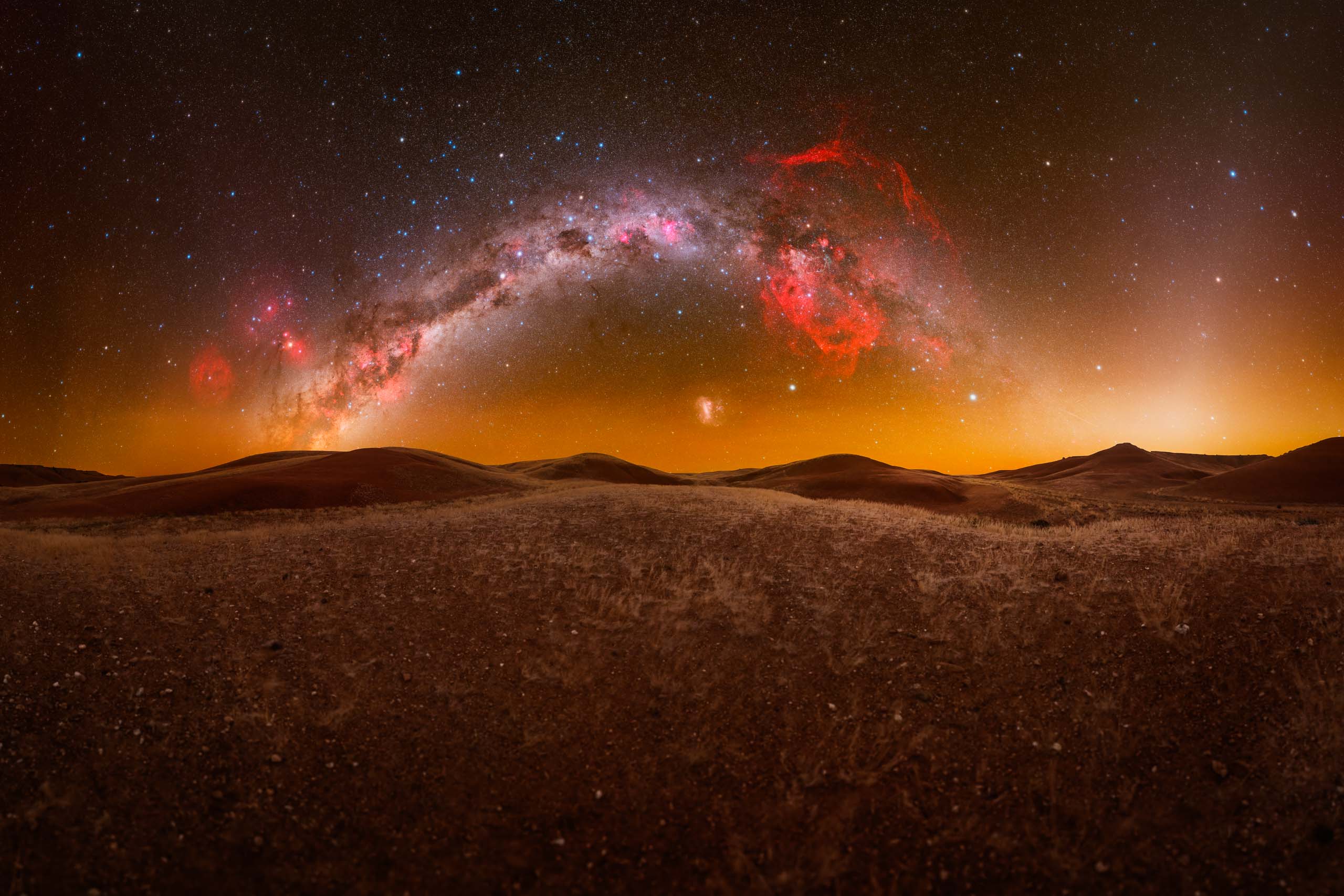
The Milky Way as seen from the remote “secret spot.”
Trip highlights
Dark skies, remote camps and real adventure
The strongest memories from this journey were not only the final images, but also the conditions around them — the silence, the distance, the planning and the unexpected moments in between.
Remote desert skies
Many of the strongest images came from places far away from towns, roads and artificial light.
Wild camping
Sleeping close to the landscape made the trip feel more intense, more flexible and much closer to nature.
Unexpected challenges
Wind, clouds, light pollution and tourist schedules often changed the plan and forced us to adapt.
Southern night sky
The Milky Way, deep-sky regions and southern constellations made every clear night feel special.
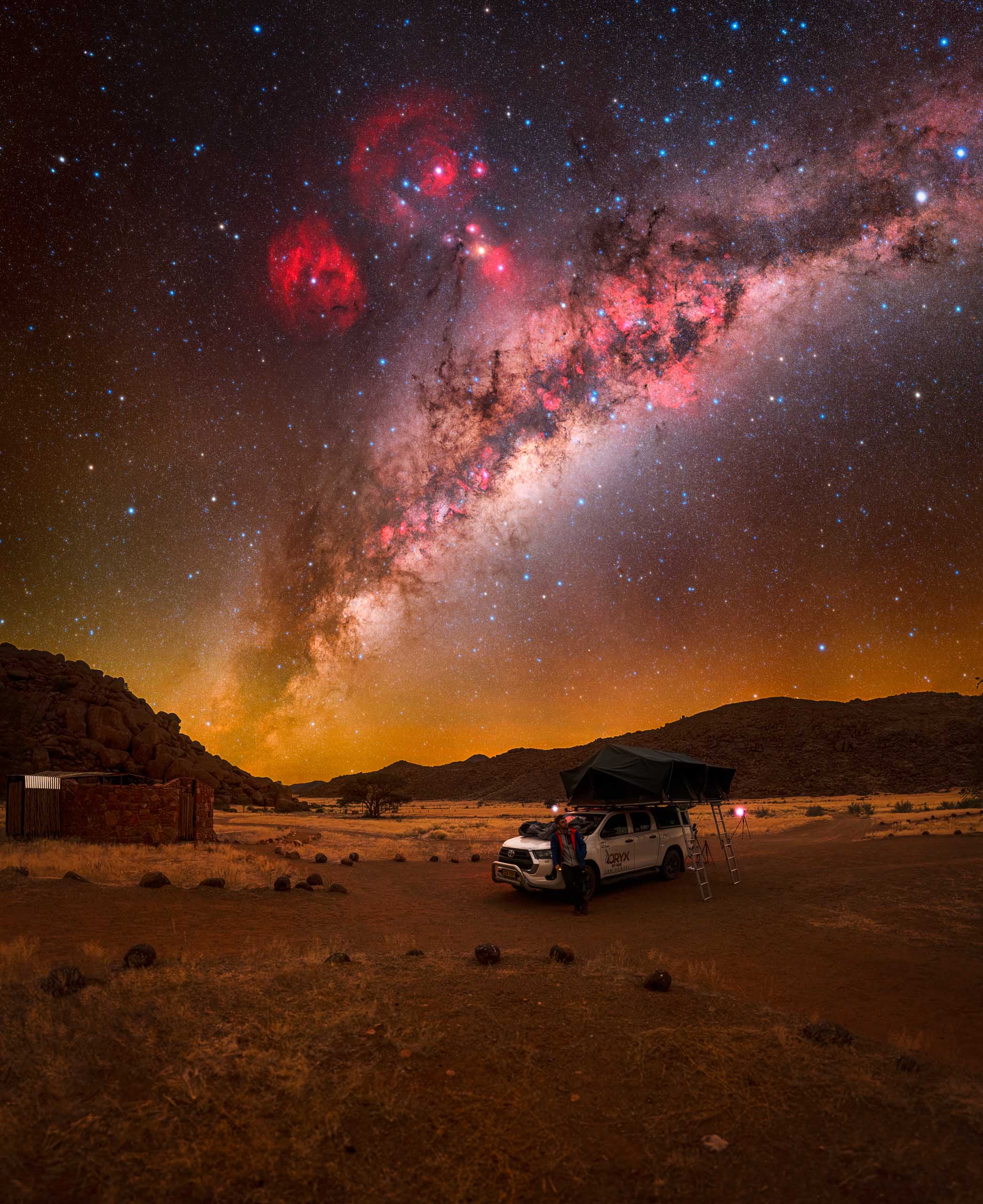
The Milky Way above one of the many campsites we visited
Under southern skies
Some of the strongest images came from the most remote nights
The further we moved away from comfort, the closer the trip came to what I had hoped for: open landscapes, real darkness and the feeling of being completely immersed in the environment.
When Comfort Did Not Mean Better Conditions
After many nights of wild camping and remote locations, we decided to spend a few nights in more tourist-oriented lodges. Looking back, this was one of the biggest mistakes of the trip.
Some places sounded promising on paper, but turned out to be too restricted, too scheduled or too affected by artificial light. Dune Star Camp, for example, offered the idea of sleeping in a roll-out bed under the stars, but the overall experience felt too controlled and inflexible for the kind of astrophotography trip we were doing.
At Soft Adventure Camp, the situation improved. Even though camping was not possible during the winter season, we received an upgrade to a proper room. Still, the night was not ideal for astrophotography because of lights across the area. Eventually, I had to search for a darker place away from the main camp.
One of the most unforgettable moments happened near an old campsite: a huge fireball crossed the sky and lit up the entire landscape for a few seconds, followed by a deep, thunder-like rumble about a minute later. I was sitting on a rock, looking down by chance, and missed most of the spectacle. No time-lapse, no photo — but a moment that burned itself into memory.
No photo, no time-lapse — but unforgettable.
Sometimes the most impressive moments of a trip are the ones you do not capture. The fireball was one of those moments.
Back to nature
Camp Gecko felt like the right kind of place again
After the more tourist-oriented stops, we knew we wanted to get back closer to nature. Camp Gecko became one of the highlights of the journey: a small, carefully designed tented camp between wide plains and mountain silhouettes.
The tents were handmade, the location felt thoughtful, and the views toward the west and east created excellent conditions for both photography and rest.
One of the unexpected highlights was the food. What we had booked as a simple meat package turned into a complete menu with fresh wild meat, salad, bread and even dessert. Sitting by the fire, watching the sun go down and preparing for another night under the stars felt much closer to the Namibia experience we had hoped for.
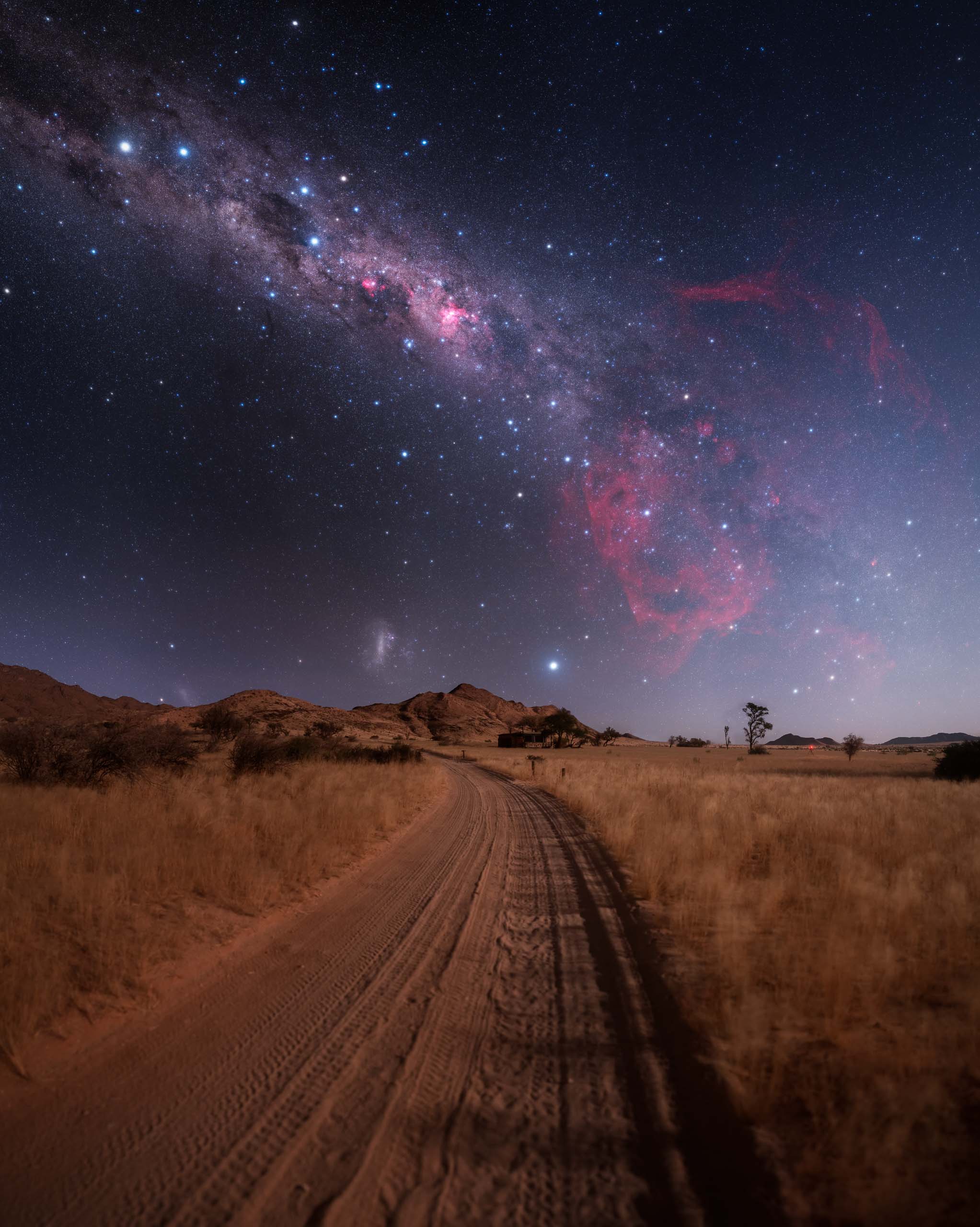
The southern Milky Way around the Gum Nebula and Eta Carina one of the brightes nebulaes in the sky – illuminated by a 25% moon.
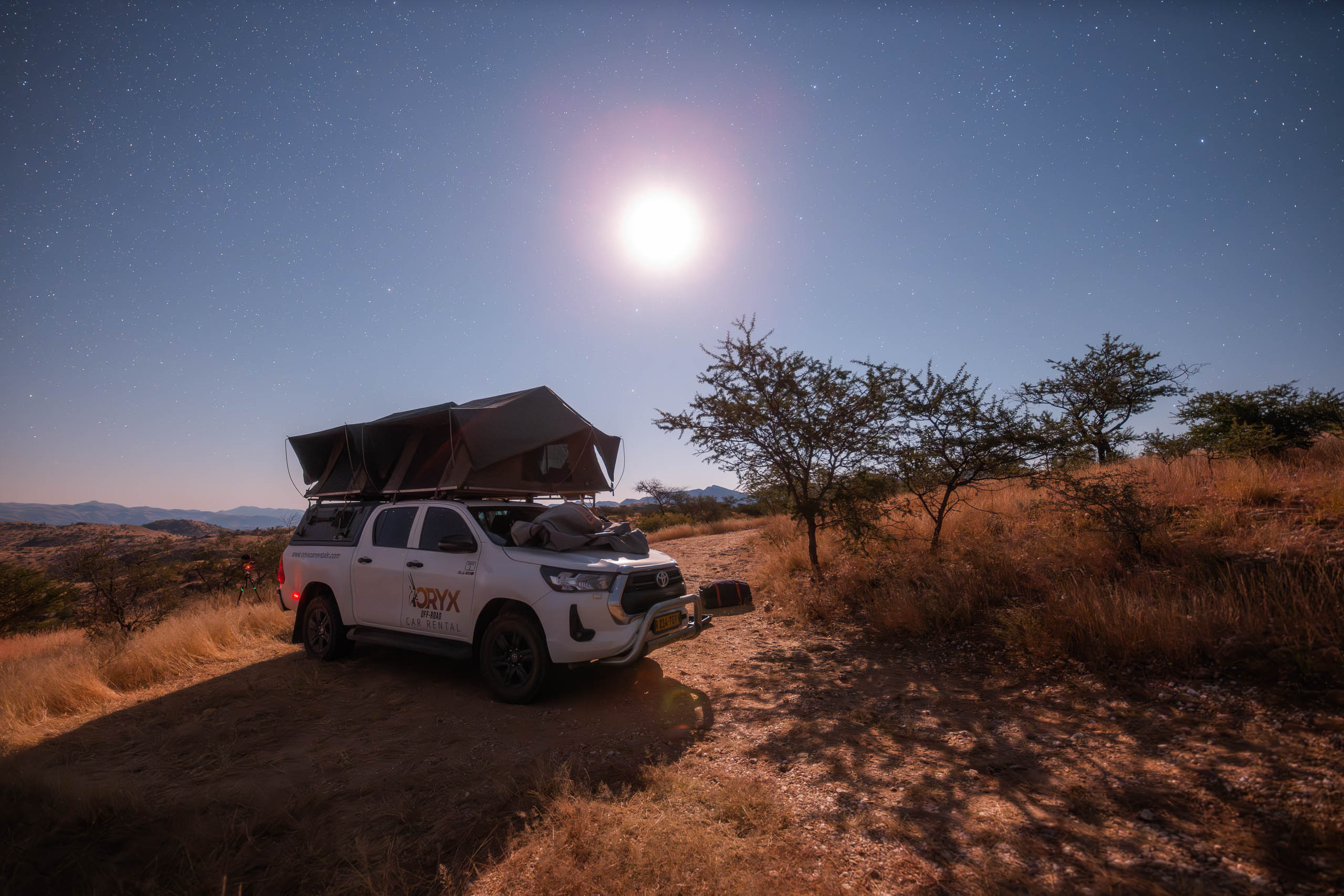
Our last night in Namibia at the Hakos Camp Site
The Final Stop: Hakos Astro Farm
The last stop of the journey was the legendary Hakos Astro Farm — a place many astrophotographers have heard about. After the experiences of the previous days, it became the strongest location of the entire trip in terms of observing conditions, atmosphere and meeting like-minded people.
Located at around 1800 meters of elevation, Hakos offered excellent conditions for astrophotography. But what made it special was not only the darkness. It was also the feeling of being surrounded by people who understood why someone would travel this far for the night sky.
We met other astrophotographers and the friendly hosts, who have been running the farm for generations. It was a fitting final stop before heading back toward the airport.
A Trip That Was Wild, Intense and Unforgettable
This journey was special in many ways. It was exhausting, intense and wild — and that is exactly why it became so memorable.
Namibia is not only impressive because of its dark skies. It is impressive because of the scale of the landscape, the silence, the distance and the way the country forces you to slow down and adapt to the environment.
My conclusion is simple: if you want to experience Namibia in a way that feels real, rent a 4×4 vehicle with a rooftop tent and spend as much time outside as possible. It is not only more flexible and often more affordable — it also brings you much closer to the places where Namibia shows its true character.
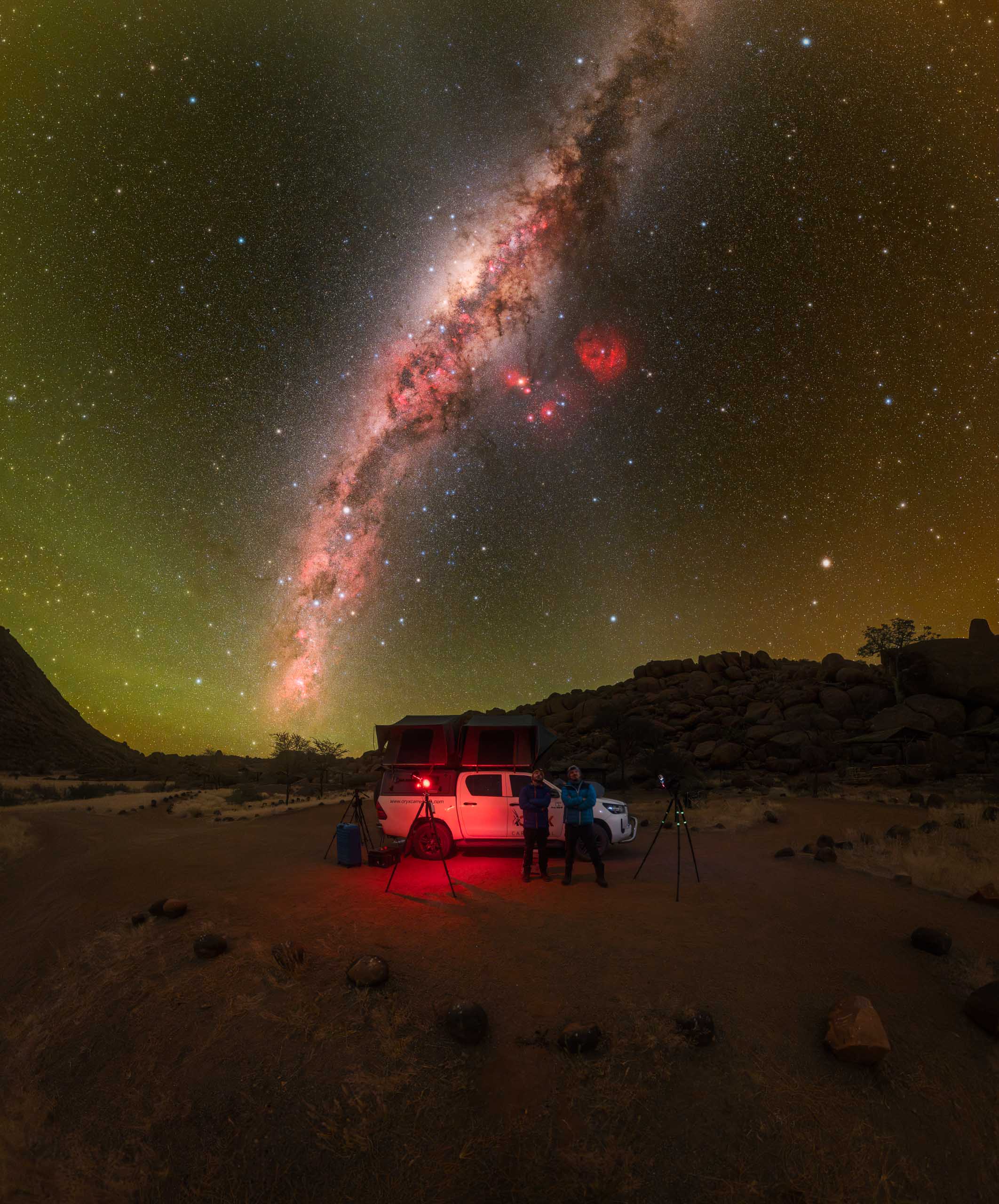
The Milky Way core above our 4×4

Explore the images
See the astrophotography work from Namibia
Browse selected nightscape, Milky Way and deep-sky images captured during my journey through Namibia.
